



.png)
One of the most popular solutions for preventing theft of goods in transit is the use of cargo door locks. However, there are many options available, each with its own advantages and disadvantages.
In this article, we analyze and compare the options most commonly found on the market.
The most basic: seals for loading doors
Loading door seals are small devices that are installed on door latches. Their primary function is to confirm that the doors have not been opened while the goods are in transit.
Some of the most common types of stamps are:
- Plastic stamps
- Security wire seals
- Bolt-type seals
- Padlock-style seals
The major drawback of seals for cargo doors is that they are highly vulnerable to tampering. All it takes is a pair of scissors, pliers, or a bolt cutter to remove the seal, making them easy targets for organized highway crime.
Outdoor locks for loading doors
External locks for loading doors typically consist of two steel components that clamp onto the outer rails of the loading doors and are connected by a lock.
These types of locks for loading doors can be classified based on their opening mechanism:
- Opens with a traditional key
- Digital lock with a 4-digit code
- Unlock via a mobile app
Some of these locks can even be connected to a GPS tracking system and send alerts if they are opened in unauthorized locations.
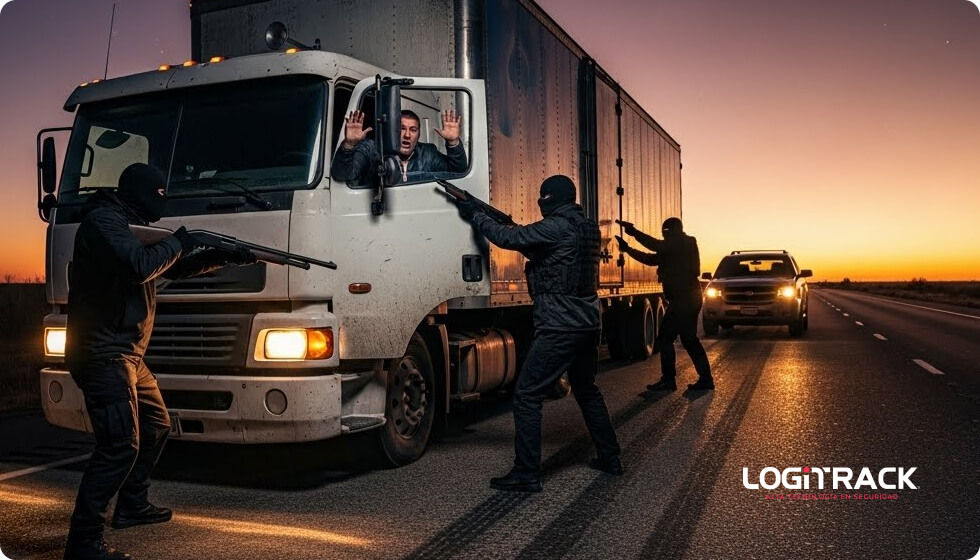
However, although locks for loading doors offer greater security than seals, because they are installed on the outside, they remain highly vulnerable to tampering (such as being struck) or even to threats against the operator to force them to open the door.
Furthermore, connecting to a tracking system merely triggers an alert to the monitoring center; it does not provide an immediate response to prevent the theft.
Lock or latch for cargo doors
Loading door latches are mechanisms installed on the inside of the door frame; unlike a padlock, they physically secure the door by engaging with the frame.
Just like locks for cargo doors, some of these locks can be connected to GPS tracking systems. These solutions are called “electronic locks” or “satellite locks.” However, they have the same drawbacks, as they do not provide an immediate response to prevent theft; instead, they simply send an alert when an anomaly is detected.
In addition, most of these locks have a single lock at the bottom, which reduces protection against unauthorized opening.
Cargolock by Logitrack: High-security lock and padlock for cargo doors
Cargolock is a lock and padlock system for cargo doors that we developed at Logitrack to address the shortcomings of other products available on the market.
This is a dual-motor system installed inside loading doors to prevent unauthorized opening via a mechanical lock. Some of its key features include:
- Anti-tampering system: The system is protected against electronic tampering (cutting or bypassing wires) or mechanical tampering (impact), making it impossible to force it open.
- Double security: Each Cargolock system includes two locks—one at the bottom and one at the top—for added protection of the cargo
- Remote and local unlocking: In addition to unlocking from the control center, the operator can unlock the unit locally using a keypad with dynamic codes similar to those used in bank tokens, subject to a protocol for contacting the monitoring center.
- Alerts and automatic locks: Our system detects if the truck leaves the depot with the fifth wheel unlocked and automatically sends an alert; if equipped with Level 3 or higher technological protection, automatic accelerator locks can be programmed.
With our solutions, we can eliminate theft from your cargo trucks in less than 90 days. Learn more by clicking here, or contact one of our advisors for a free initial consultation.
%20(1).png)
.png)



