



.png)
How satellite fleet tracking works and its benefits
Fleet management has undergone a radical transformation with the introduction of satellite tracking. This technological advancement has improved operational efficiency and raised safety standards in the transportation sector.
This article explains how satellite tracking works and explores the many benefits it offers to logistics and transportation companies.
What is Satellite Fleet Tracking?
Satellite fleet tracking is a technology that allows companies to monitor and manage their vehicles in real time.
Originating in recent decades, this technology has evolved significantly, moving from simple tracking systems to comprehensive management solutions that leverage the power of GPS and satellite communications to provide detailed data on every vehicle in the fleet.
How Does Satellite Fleet Tracking Work?
At the heart of the satellite tracking system is GPS, which provides the exact location of each vehicle. This information is transmitted via satellites and cellular antennas to a control center, where management software analyzes the received data. This process gives companies a comprehensive overview of their fleet’s performance, including travel speeds, routes taken, and stop times, among other metrics.
Key Benefits of Satellite Fleet Tracking
- Improved Operational Efficiency: The ability to monitor routes in real time allows companies to optimize routes, reduce downtime, and increase fleet productivity.
- Enhanced Security: Constant monitoring provides an additional layer of security, enabling a rapid response to any incident or unexpected route deviation.
- Cost Reduction: Route optimization leads to lower fuel consumption and reduced vehicle wear and tear, resulting in significant savings on maintenance.
- Enhanced Customer Satisfaction: Accurate delivery times and the ability to provide real-time information on shipment status significantly improve the customer experience.
- Informed Decision-Making: Analyzing the collected data helps companies identify trends, anticipate future needs, and make strategic decisions based on reliable information.
Implementation of Satellite Fleet Tracking
The effective implementation of a satellite tracking system in a fleet requires careful planning and a clear understanding of the company’s operational and safety objectives.
The first step is to choose the right technology that aligns with the fleet’s specific needs, taking into account factors such as fleet size, vehicle types, and typical routes. This selection should be guided by a detailed evaluation of the features and capabilities of different satellite tracking systems available on the market.
Once the technology has been selected, the next crucial step is staff training. This includes not only the operators who will monitor the system in real time, but also the drivers, who need to understand how their behavior on the road can be influenced and improved through satellite tracking.
The integration of the system into daily fleet operations must be seamless, ensuring that all collected data is accessible and useful for decision-making. This process often requires continuous adjustments and optimizations to maximize the system’s benefits.
Satellite Fleet Tracking and Road Safety
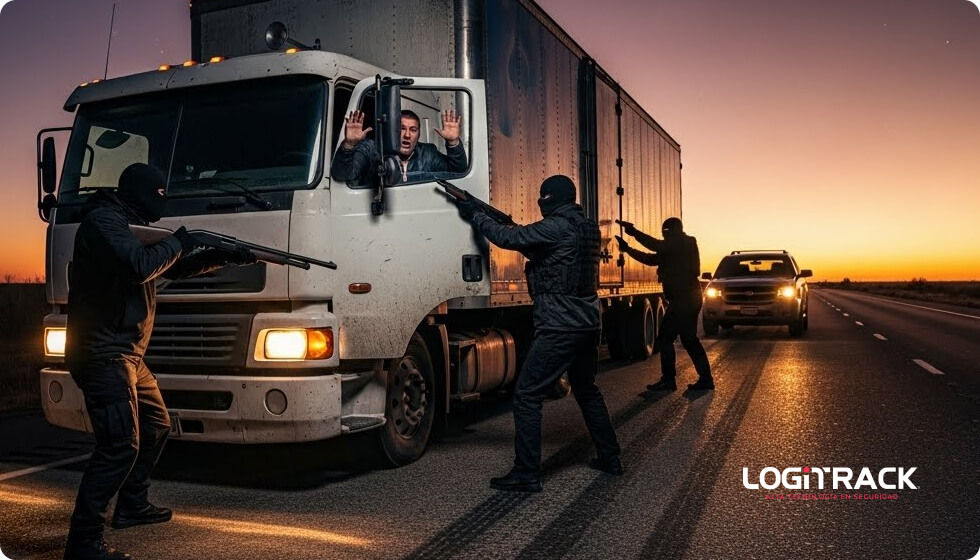
Although satellite tracking provides a significant layer of security by enabling real-time monitoring of vehicles, it is important to recognize that this technology alone is not enough to fully protect against highway theft.
Thieves are becoming increasingly sophisticated in their methods, requiring companies to adopt a more comprehensive and technologically advanced security strategy to effectively combat these risks.
To address this need, it is essential to supplement satellite tracking with advanced security systems that provide automatic and immediate responses to attempted theft or sabotage. Technologies such as throttle lock and dual anti-jamming systems are examples of solutions that can stop a theft in progress by remotely immobilizing the vehicle or protecting the tracking signal from interference.
The combination of satellite tracking with these advanced safety measures creates a much safer environment for the fleet, the cargo, and the drivers, ensuring that operations can continue without major disruptions.
As you can see, adopting satellite tracking in fleet management is a key step toward more efficient, safer, and more profitable operations.
However, to successfully address today’s road safety challenges, it is crucial to implement this technology alongside advanced safety systems.
This integrated approach not only protects against the most common risks but also prepares companies to respond quickly to unexpected situations.
Through our solutions, we eliminate theft from your cargo trucks in less than 90 days. Learn more by clicking here, or contact one of our advisors for a free initial consultation.
%20(1).png)
.png)



